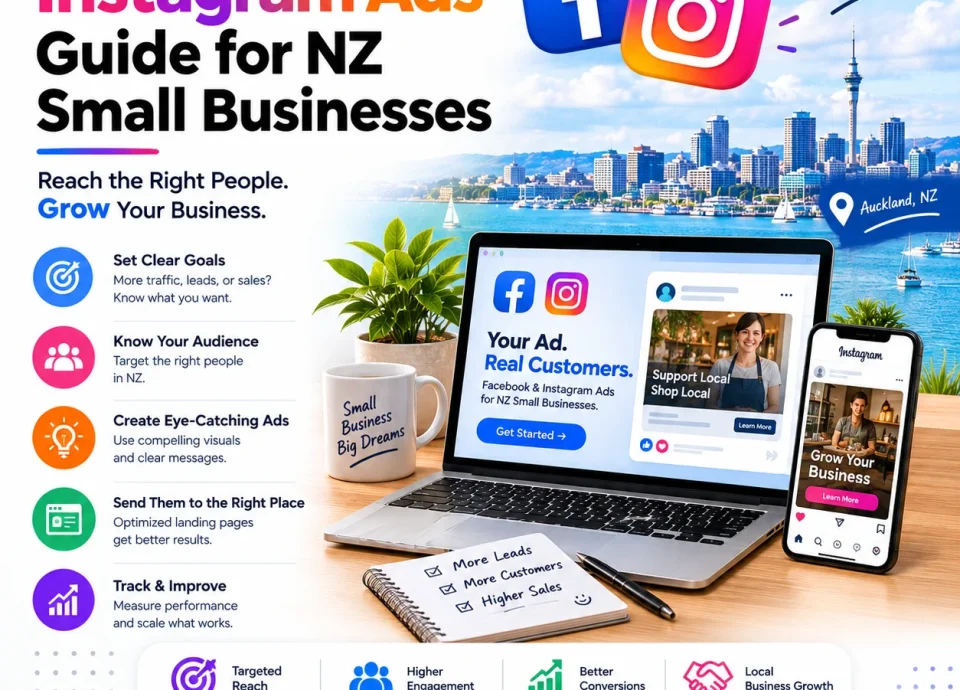
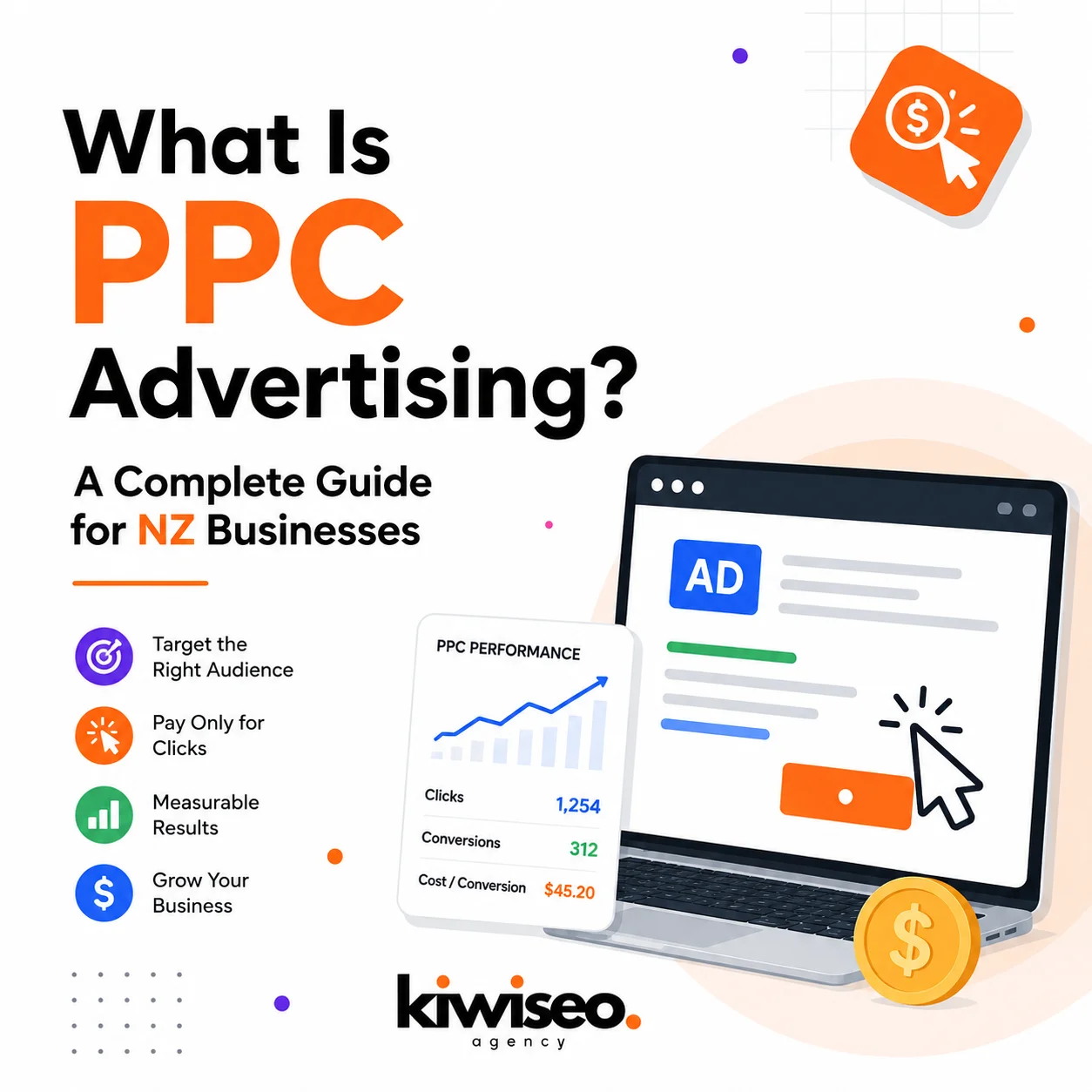
PPC advertising, short for pay per click, is a form of online marketing where a business pays a fee only when someone clicks their ad. Instead of earning traffic organically through search rankings, a business bids on keywords and pays for each visitor an ad brings in. Google Ads is the platform most Kiwi businesses mean when they say PPC, though the model also covers Microsoft Advertising, Facebook and Instagram ads, and shopping campaigns.
For a business in Auckland, Wellington, or Christchurch trying to win customers searching right now, PPC advertising is often the fastest route to the top of the page. SEO builds visibility over months, working through content, links, and technical fixes that take time to register with Google. PPC skips that wait entirely and can put you above every organic result the same afternoon a campaign goes live, provided the account is set up properly and the budget matches the competition in your category.
This guide covers what PPC advertising actually means, how the auction behind it works, the different ad formats available, what campaigns typically cost in NZ, and how to know whether a campaign is actually doing its job rather than just spending money.
What Does PPC Mean in Simple Terms?
PPC means paying only when someone acts, not when someone simply sees your ad. A billboard on the motorway charges the same fee whether ten thousand drivers glance at it or none of them ever buy from you. A PPC ad for “electrician Wellington” only costs money the moment someone who typed that exact phrase clicks through, and that person already has a fairly urgent problem.
Every time someone searches a keyword you’re bidding on, the ad platform runs an auction behind the scenes. The winner isn’t simply whoever bids the highest. Google and Microsoft both weigh a Quality Score, a rating based on how relevant your ad, keyword, and landing page are to the search. A well matched ad can beat a bigger budget competitor because the platform rewards relevance, not just spend. That’s what most owners underestimate about PPC: it’s a mix of bidding strategy and ad quality, not a straight auction for the deepest pockets.
PPC sits inside the broader paid media category, alongside paid social. But search based PPC captures a different kind of intent. Someone scrolling Instagram wasn’t necessarily looking to buy. Someone typing “emergency plumber Hamilton” at 11pm almost certainly is.
The Main Types of PPC Advertising
Search Ads
Search ads are the text ads above and below Google’s organic results when someone types a relevant keyword. They’re built around high intent search terms and conversion focused copy. For most NZ service businesses, search is where a PPC advertising budget starts.
Display Ads
Display ads run as banners and image creative across the Google Display Network, a huge collection of partner sites, apps, and YouTube placements. They suit brand awareness better than immediate conversions, since the audience isn’t actively searching for what you sell at that moment.
Remarketing
Remarketing shows ads to people who already visited your site but didn’t convert. Someone browsed your services page, left, and now sees your ad again on a news site a day later. It’s usually the highest return channel in a PPC advertising account, since the audience already knows who you are.
Shopping Ads
Shopping ads pull from a product feed and show a photo, price, and store name straight in the search results. Ecommerce businesses lean on these heavily, letting a ready to buy customer compare products before landing on a website.
Video Ads
Video ads run on YouTube and the Google video partner network, priced on views or clicks depending on the goal. They suit awareness and consideration well, less so a direct, immediate sale.
Why PPC Matters for NZ Businesses
New Zealand is a small market with a lot of local competition packed into a handful of major cities. A Hamilton landscaper and an Auckland accounting firm are both fighting for page one against businesses that have run ads for years, and a business with zero paid presence hands that visibility to whoever shows up instead.
Budget control is the other reason PPC suits smaller NZ operators. A print ad or radio spot costs the same whether it reaches one buyer or none. A Google Ads campaign spends nothing until someone clicks, and it can be paused within minutes if it isn’t converting. That control didn’t exist before paid search, which is why even single person trades businesses now run PPC campaigns once out of reach through traditional advertising.
Measurement compounds the advantage. A small Christchurch café can see exactly how many people clicked its ad, what device they used, and whether that turned into a booking. A billboard gives none of that. For an owner watching every dollar, seeing what’s working, and cutting what isn’t, is often worth more than the traffic itself, since it means every future dollar spent is better informed than the last.
There’s also a competitive reality specific to a market this size. Once one business in a category starts running PPC advertising well, competitors who stay off paid search effectively cede that top of page real estate, even if their organic rankings are strong. Showing up in both the ads and the organic results at once, a tactic often called search dominance, is increasingly common among established NZ businesses precisely because it works.
How a PPC Campaign Actually Works
Running paid search well is less about writing a good ad and more about the system behind it. A typical account moves through five stages.
- Account and competitor audit. Reviewing what already exists, or starting fresh, and checking competitor bids for quick wins.
- Keyword research and strategy. Building the keyword list, campaign structure, and budget split around what customers actually search.
- Campaign build. Writing ad copy, setting up extensions, and installing conversion tracking so every click can be measured.
- Ongoing optimisation. Adjusting bids, pausing weak keywords, and testing new ad variations as data comes in.
- Reporting. Plain English reporting so an owner can see cost per lead and return on ad spend without decoding a dashboard.
Skipping conversion tracking is the single most common reason a PPC account looks like it’s failing when it’s actually just invisible. Without it, you can see clicks and spend, but not which of those clicks turned into an enquiry, a call, or a sale. Google Ads offers built in conversion tracking through website tags, phone call tracking, and imported offline conversions, and setting this up before launch, not after, is what separates an account you can actually optimise from one you’re just guessing about.
Most accounts also need a settling in period. The first two to three weeks are spent gathering data: which keywords convert, which ad copy gets clicked, which times of day and locations perform best. Making major changes too early, before the account has enough data, tends to reset that learning process and slow everything down. Patience in the first month usually pays off in a lower cost per lead by month two or three.
What Does PPC Cost in New Zealand?
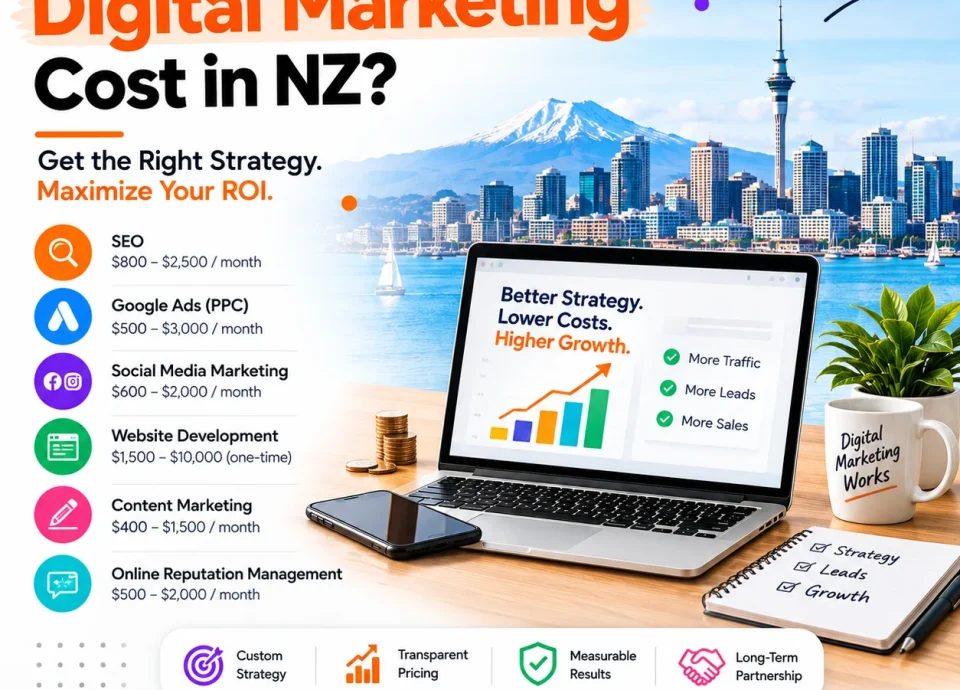
Google Ads pricing in NZ is really two separate numbers people often lump together. The first is ad spend, the money paid directly to Google every time someone clicks. The second is management, the fee for someone to actually build and run the account.
Most small to medium NZ businesses spend $450 to $2,500 a month on ad spend alone, with cost per click ranging from under a dollar for low competition brand terms to over $10 for competitive categories like legal or finance. Management fees typically add $500 to $2,000 a month, billed flat or as a percentage of spend. Add GST at 15% on whatever Google charges, since that applies to advertising services in NZ like any other purchase.
A realistic starting budget sits around $1,000 to $1,500 a month all in. Below that, an account often doesn’t get enough clicks to tell you anything useful before the month is over.
Common PPC Mistakes to Avoid
Most underperforming accounts share the same handful of problems. Launching without conversion tracking means flying blind on what’s actually driving results. Bidding on broad, generic keywords instead of specific, high intent phrases burns budget on clicks that were never going to convert. Sending traffic to a generic homepage instead of a page built around the exact offer tanks conversion rates even when the ad itself is strong. And treating a campaign as set and forget, rather than something needing weekly attention early on, leaves easy wins on the table.
The fix usually isn’t a bigger budget. It’s narrower targeting, a landing page that matches the ad, and someone actually watching the account in the first few weeks.
Frequently Asked Questions
What does PPC stand for?
PPC stands for pay per click, an advertising model where a business pays a fee each time someone clicks their ad rather than paying a flat rate to display it.
Is PPC the same as Google Ads?
No. Google Ads is the largest PPC platform, butPPC advertising also covers Microsoft Advertising and paid social platforms like Facebook and Instagram. Google Ads is simply the most common starting point for NZ search based PPC.
How much does PPC cost for a small business in NZ?
Most small NZ businesses budget $1,000 to $1,500 a month all in, covering both ad spend and management, though this varies significantly by industry and competition.
How quickly does PPC generate results?
Search campaigns typically produce enquiries within a few days to two weeks of launch, though most accounts need three to four weeks before cost per lead starts to settle as tracking and targeting get refined.
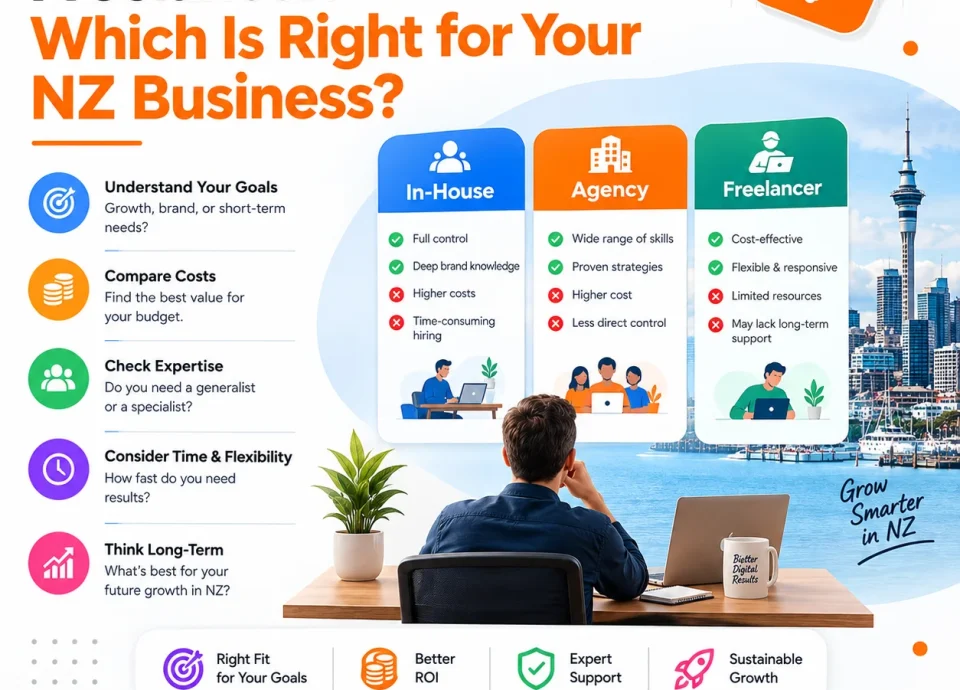
Do I need an agency to run PPC, or can I manage it myself?
A business with time to learn can manage a basic campaign themselves, but mistakes in bidding and targeting can waste budget quickly, which is why many NZ businesses bring in a specialist once they’re ready to scale past a small test budget.
Where to Start
The right entry point depends on how urgently you need results and how your customers actually search. A trades business chasing local, time sensitive jobs usually sees the fastest return from search ads paired with local SEO. A retail brand with a strong visual product often gets more traction starting with shopping ads or paid social. A professional services firm with a longer sales cycle might lean on remarketing to stay visible while a prospect weighs up options over several weeks.
Whatever the starting channel, the same principles hold: set up conversion tracking from day one, start with a budget big enough to gather real data rather than a token amount that never leaves the auction’s warm up phase, and give the account a few weeks before judging the results. A campaign that looks slow in week one is often just gathering the data it needs to actually perform in week four.
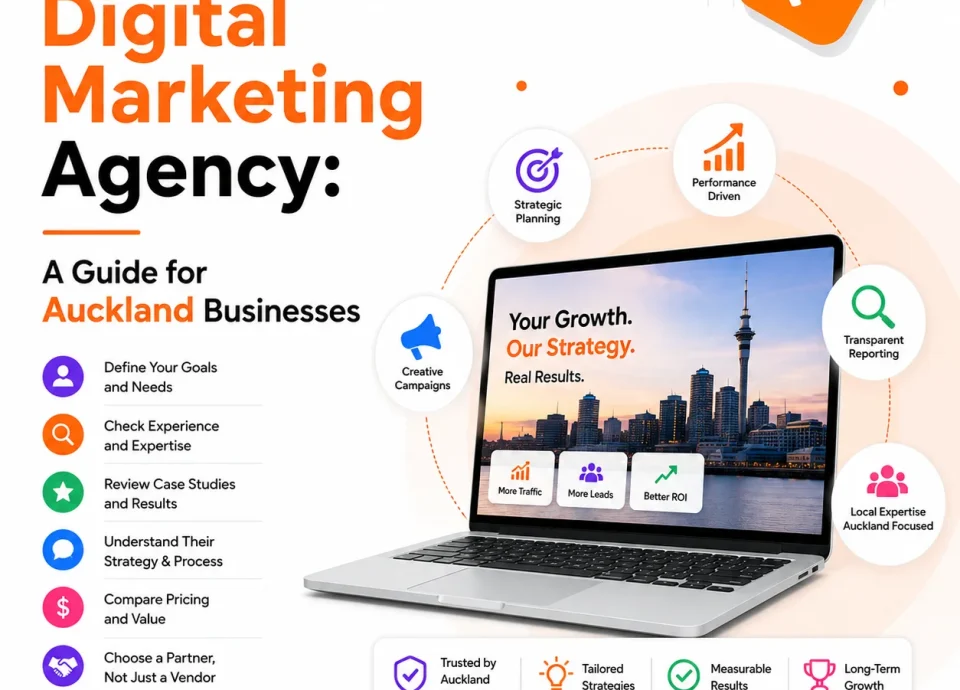
At Kiwi SEO Agency, this is usually the first conversation with a new client: working out which keywords and channels actually match their business before a single dollar goes into an ad account.