Auckland’s house washing industry has quietly become one of the most competitive local service categories online. Search “house washing Auckland” today and you’ll find dozens of operators fighting for the same handful of map pack spots and page-one rankings. If your business isn’t visible in that moment — when a homeowner notices mould creeping up their weatherboards and reaches for their phone — you’re losing the job before you even know it existed.
This guide goes beyond generic SEO advice to explain why each tactic works for a local, service-area business like house washing, and how to sequence your efforts for the fastest realistic results.
Why House Washing SEO Is Different From Generic SEO
House washing is a low-consideration, high-urgency, hyper-local service. Customers rarely compare five providers over a week of research the way they might for a kitchen renovation. Instead, they search, scan the top 3–5 results, check star ratings, and call. That behavior pattern means three things matter disproportionately more than they would for, say, an e-commerce site:
- Google Business Profile visibility (the map pack) often drives more calls than organic website rankings
- Review volume and recency function as a trust shortcut in a category full of one-person operators and franchise vans
- Suburb-level relevance matters more than city-wide authority — a search for “house washing Titirangi” behaves differently than “house washing Auckland”
Keep that behavioral context in mind as you work through the tactics below.
1. Keyword Research That Reflects How People Actually Search
Broad terms like “house washing Auckland” are valuable but brutally competitive, and they’re only part of the picture. A stronger keyword strategy layers three tiers:
Core service terms — the head terms your homepage and main service page should target: house washing services Auckland, exterior house cleaning, residential pressure washing.
Method-specific terms — customers increasingly search by technique because they’ve heard the terms from a neighbour or a previous quote: soft washing, water blasting, low-pressure house wash (important, since incorrect pressure washing can strip paint and void weatherboard warranties — a distinction worth writing content about).
Suburb and problem-based long-tail terms — these convert at a much higher rate because they signal specific intent: “roof moss removal Titirangi,” “gutter cleaning before painting Mt Eden,” “black mould removal weatherboard house Auckland.” A dedicated page or well-structured content section for your top 8–10 service suburbs will consistently outperform a single generic city-wide page, because Google increasingly rewards pages that demonstrate genuine local relevance rather than keyword-stuffed suburb lists.
Tools like Google Keyword Planner, Google Search Console (once you have data), and even Google’s own autocomplete and “People also ask” boxes are free ways to validate real search demand before you build pages around a term.
2. Local SEO: Where Most of the Ranking Battle Actually Happens
For a business like this, local SEO isn’t one tactic among many — it’s the majority of the work.
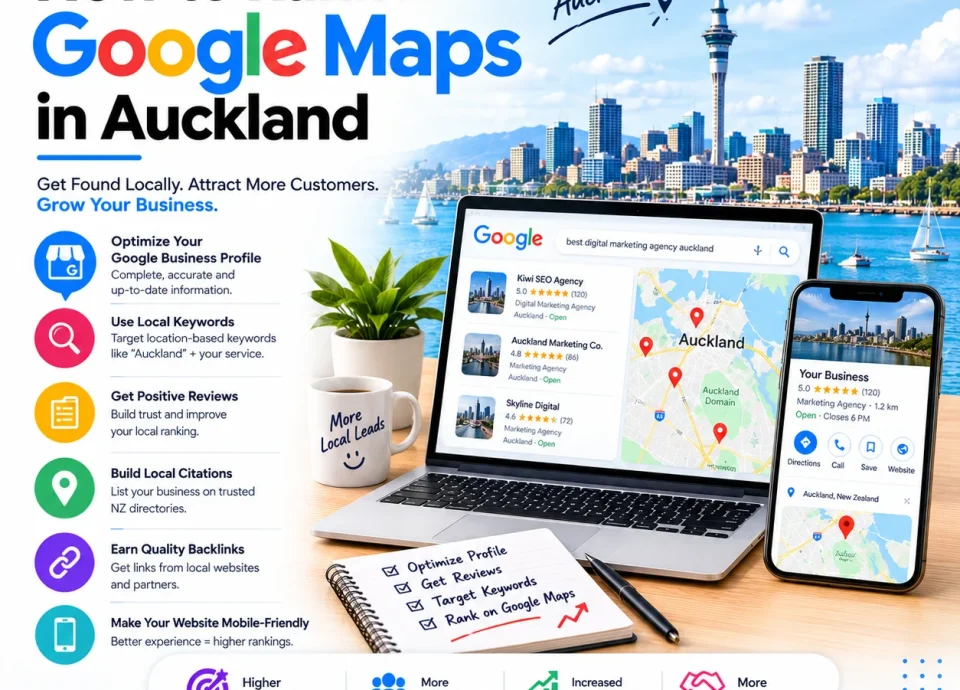
Google Business Profile (GBP) is the single highest-leverage asset you have. Beyond the basics (accurate categories, service areas, business hours), the details that separate top-3 map pack listings from page-two obscurity include:
- Choosing the most specific primary category available (not just “House cleaning service” if a more precise option like “Pressure washing service” exists)
- Uploading fresh, genuine before/after photos regularly — GBP’s algorithm favors profiles with recent activity
- Using the Products/Services section to list every specific offering (roof washing, driveway cleaning, gutter clearing) since each acts as a mini-landing page
- Responding to every review, positive or negative, within a few days — response behavior is a known ranking input
NAP consistency (Name, Address, Phone) across directories sounds mundane but directly affects how confidently Google associates your citations with your business. Even small inconsistencies (a missing suite number, “Rd” vs “Road”) can dilute this signal.
On-page local relevance means embedding real local context into your content — actual suburb names, recognisable landmarks, and NZ-specific detail like the effect of Auckland’s harbour humidity on mould and lichen growth on north-facing roofs. This kind of specific, locally-grounded content is difficult for competitors to copy generically and reads as more credible to both users and search engines.
3. Backlinks: Quality and Relevance Over Volume
A handful of backlinks from genuinely relevant, trusted NZ sources will outperform fifty low-quality directory links. Worthwhile targets include:
- Established local directories (Neighbourly, Yellow NZ, NoCowboys) — useful for citation consistency as much as link value
- Trade associations or supplier sites (paint manufacturers, roofing suppliers) that list recommended service providers
- Local Auckland news or community sites, particularly through genuine engagement — sponsoring a local event or being quoted in a home-maintenance story earns a far more valuable link than a paid directory listing
- Guest contributions to home improvement or property management blogs, where you provide genuinely useful technical content (e.g., “how to tell whether your roof needs washing or reroofing”)
Avoid link schemes or bulk-purchased directory packages — Google’s algorithms are increasingly effective at devaluing or penalizing these, and the short-term ranking bump rarely survives long.
4. Reviews: Your Most Underused Conversion Tool
Reviews influence both rankings and click-through rate, but most businesses treat them passively. A more deliberate approach:
- Ask for the review at the moment of highest satisfaction — right after the customer sees the finished result, not days later by email
- Make it frictionless: a direct GBP review link via text message converts far better than a generic request
- Mention specific services in your ask (“if you were happy with the roof and gutter clean…”) since review text containing service keywords can reinforce topical relevance
- Address negative reviews professionally and specifically — a thoughtful public response often does more to build trust with prospective customers than the negative review does to hurt you
5. Content That Builds Authority, Not Just Traffic
Blog content works best when it answers real pre-purchase questions and demonstrates expertise, rather than existing purely to hit a keyword. Strong topics for this niche include:
- How often Auckland’s climate actually requires house washing (this varies meaningfully by exposure, tree cover, and coastal proximity — genuinely useful, non-generic information)
- Soft washing vs. pressure washing, and why the wrong choice can damage cladding — a topic that also builds trust by showing you prioritise the customer’s property over a quick job
- What to look for in a quote (insurance, water reclamation practices, chemical safety) — content like this signals expertise and can pre-qualify better customers
- Seasonal guides tied to Auckland’s actual weather patterns, since timing content around real seasonal search spikes (e.g., pre-summer, post-winter mould season) captures intent when it’s highest
Consistent publishing also gives you fresh internal linking opportunities back to your suburb and service pages, reinforcing the local relevance signals discussed above.
Bringing It Together
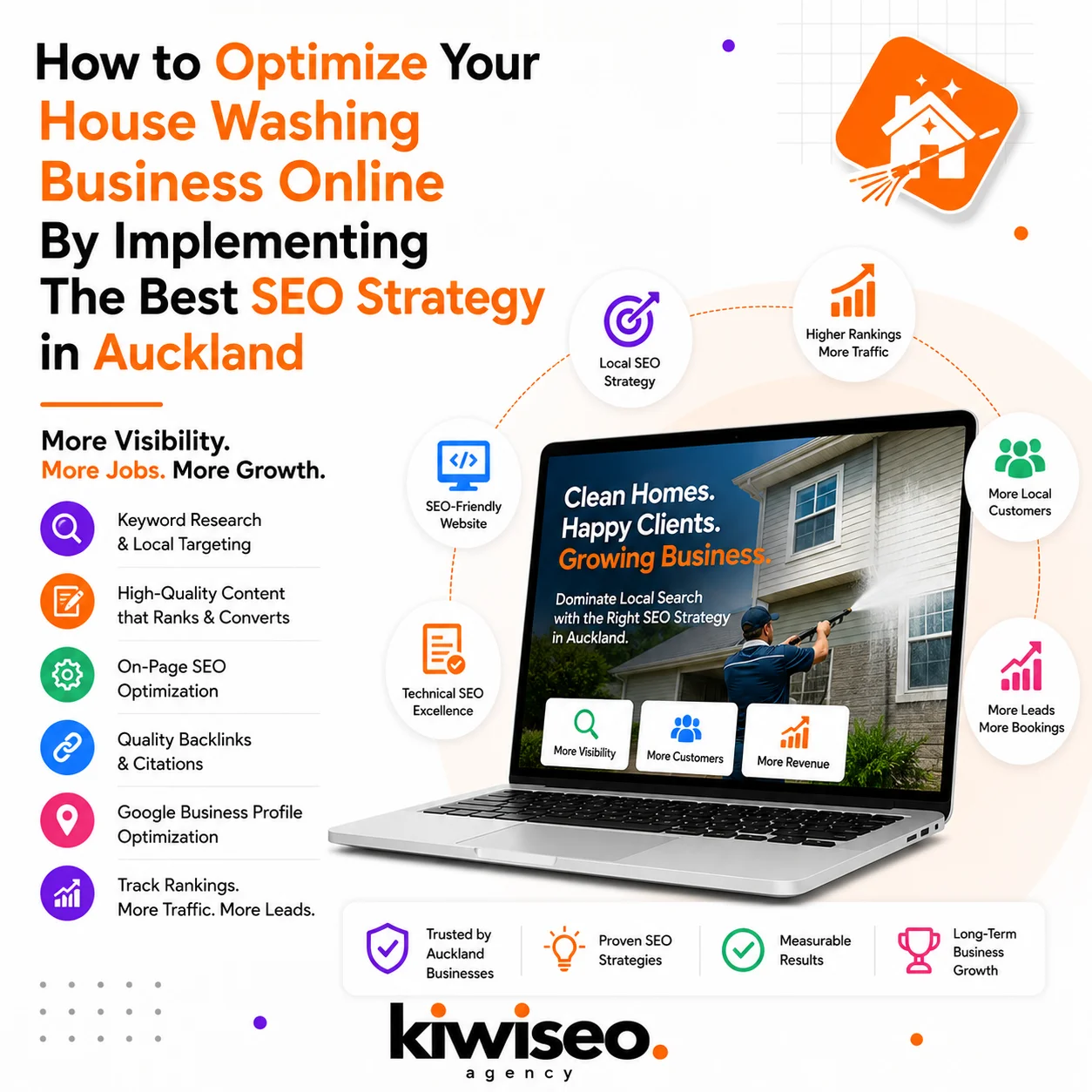
None of these five areas works well in isolation. A stacked, well-reviewed Google Business Profile with no supporting website content will plateau. A content-rich website with inconsistent NAP data and no reviews will struggle to convert visibility into calls. The businesses that dominate Auckland’s house washing search results are the ones treating local SEO as an integrated system — accurate citations, a genuinely locally-relevant website, a steady flow of reviews, and content that demonstrates real expertise.
If managing all of this alongside actually running jobs sounds like more than you have bandwidth for, working with a team that specialises in local NZ service-business SEO — like Kiwi SEO Agency — can shortcut the learning curve considerably. Get in touch to find out where your current visibility stands and what’s realistically achievable